Blocked Drains
Blocked drains are one of the most common plumbing issues. Whether it's slow-draining or sewage backing up, acting quickly can prevent bigger problems and costly damage.
What to do if you suspect a Blocked Drain
- Stop using water where possible to avoid overflow or damage.
- Check external drains for obvious overflow points.
- Avoid using chemical drain cleaners (they can damage pipes).
- Contact a licensed plumber to investigate and clear (03) 5446 1535
They may advise you to report to Coliban Water 1300 363 200 (see why)
Early intervention can often prevent a minor blockage from turning into a major excavation.
When to Contact Coliban Water
If you suspect a sewer blockage, it's important to follow the correct process:
1. Call Coliban Water 1300 363 200 to report the issue
2. They may:
- Send their crew to inspect, or
- Advise you to contact a plumber
Important
- If a plumber attends and determines the blockage is outside your property boundary (in the main sewer),
- The invoice can typically be forwarded to Coliban Water for reimbursement
This step can potentially save you from paying for work that falls under water authority's responsibility.
Signs of a Blocked Drain
Blocked drains don't always happen suddenly. Common warning signs include:
- Slow draining sinks, showers, or baths
- Gurgling or bubbling noises from pipes or drains
- Water backing up in unexpected places (e.g. shower when toilet is flushed)
- Unpleasant smells from drains
- Overflowing gully trap or external drain
- Toilet not flushing properly or rising water levels
If you notice one or more of these signs, it's likely a developing blockage.
Suspect a blocked drain?
New Paragraph
- Stop using water where possible to avoid overflow or damage.
- Check external drains for obvious overflow points.
- Avoid using chemical drain cleaners (they can damage pipes).
- Contact a licensed plumber to investigate and clear (03) 5446 1535
They may advise you to report to Coliban Water 1300 363 200 (why?)
Early intervention can often prevent a minor blockage from turning into a major excavation.
Contacting Coliban Water
If you suspect a sewer blockage, it's important to follow the correct process:
1. Call Coliban Water 1300 363 200 to report the issue
2. They may:
- Send their crew to inspect, or
- Advise you to contact a plumber
Important
- If a plumber attends and determines the blockage is outside your property boundary (in the main sewer), the invoice can typically be forwarded to Coliban Water for reimbursement
This step can potentially save you from paying for work that falls under water authority's responsibility.
Where Are Your Drains?
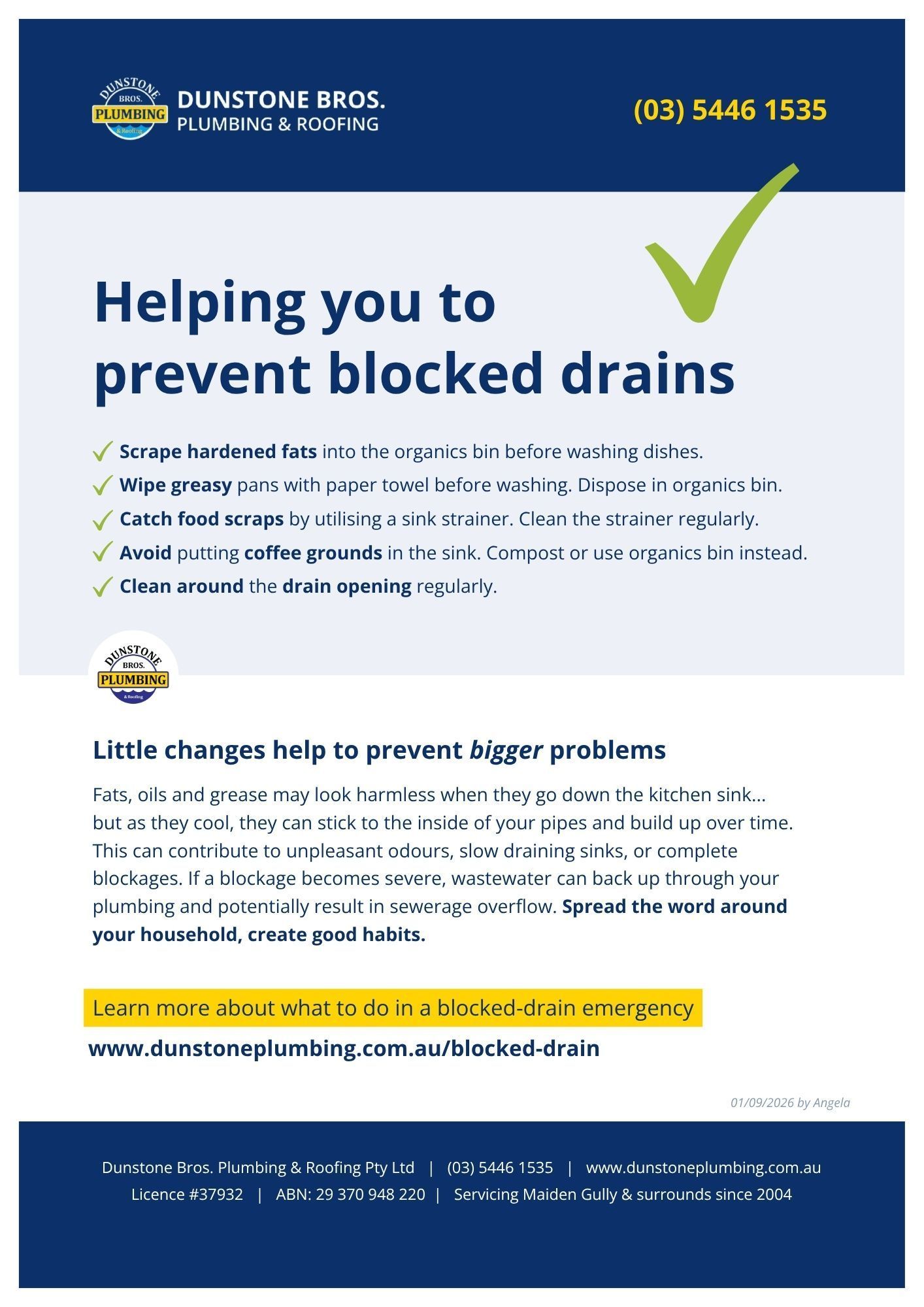
Your property has multiple drains, both inside and outside:
- Internal drains - sinks, toilets, showers, baths, and floor wastes.
- External drains - Overflow relief gully, inspection openings (IOs), boundary traps.
- Underground pipework - connects your home to the main network.
Most drainage issues occur in underground pipes where debris, grease, tree roots, or ground movement can cause blockages.
Image credit: https://coliban.com.au/files/inline-images/SewerResponsibilities.JPG
Where Are Your Drains?
Your property has multiple drains, both inside and outside:
- Internal drains - sinks, toilets, showers, baths, and floor wastes.
- External drains - Overflow relief gully, inspection openings (IOs), boundary traps.
- Underground pipework - connects your home to the main network.
Most drainage issues occur in underground pipes where debris, grease, tree roots, or ground movement can cause blockages.
Sewer vs Stormwater - What's the Difference?
Understanding the difference is important, especially when it comes to responsibility and reporting issues.
Sewer Drains
- Carry wastewater from toilets, sinks, showers, and laundry.
- Connected to the sewer main in the street.
- Typically include an inspection opening (IO)
Stormwater Drains
- Carry rainwater from roofs, gutters, and surface drains.
- Discharge to street drains or legal points of discharge.
- Not connected to the sewer system.
Sewer vs Stormwater - What's the Difference?
Understanding the difference is important, especially when it comes to responsibility and reporting issues.
Sewer Drains
- Carry wastewater from toilets, sinks, showers, and laundry.
- Connected to the sewer main in the street.
- Typically include an inspection opening (IO)
Stormwater Drains
- Carry rainwater from roofs, gutters, and surface drains.
- Discharge to street drains or legal points of discharge.
- Not connected to the sewer system.
Signs of a Blocked Drain
Blocked drains don't always happen suddenly. Common warning signs include:
- Slow draining sinks, showers, or baths
- Gurgling or bubbling noises from pipes or drains
- Water backing up in unexpected places (e.g. shower when toilet is flushed)
- Unpleasant smells from drains
- Overflowing gully trap or external drain
- Toilet not flushing properly or rising water levels
If you notice one or more of these signs, it's likely a developing blockage.
What to do: Blocked Drain
- Stop using water where possible to avoid overflow or damage.
- Check external drains for obvious overflow points.
- Avoid using chemical drain cleaners (they can damage pipes).
- Contact a licensed plumber to investigate and clear (03) 5446 1535
They may advise you to report to Coliban Water 1300 363 200 (see why)
Early intervention can often prevent a minor blockage from turning into a major excavation.
When to Contact Coliban Water
If you suspect a sewer blockage, it's important to follow the correct process:
1. Call Coliban Water 1300 363 200 to report the issue
2. They may:
- Send their crew to inspect, or
- Advise you to contact a plumber
Important
- If a plumber attends and determines the blockage is outside your property boundary (in the main sewer),
- The invoice can typically be forwarded to Coliban Water for reimbursement
This step can potentially save you from paying for work that falls under water authority's responsibility.
We are the local Master Plumbers. As an accredited business, we assure you the best quality workmanship that is to be expected from a registered master plumber.

We are the local Master Plumbers. As an accredited business, we assure you the best quality workmanship that is to be expected from a registered master plumber.